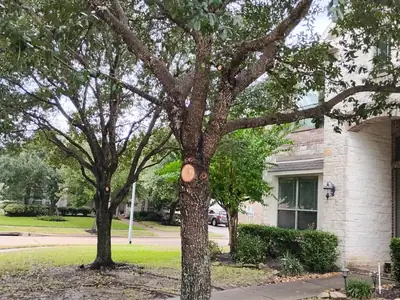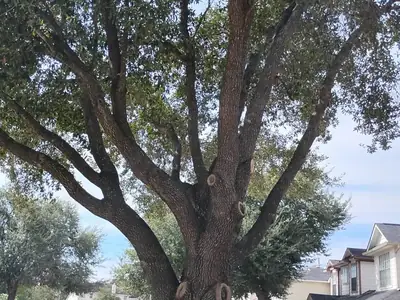
Pruning at the right time helps trees grow strong branch structure and heal cuts quickly. In Texas, the right time depends on what you’re pruning and how much you’re taking off. Oaks follow a different calendar altogether.
Here is a simple guide for Cypress homeowners.
The short answer
- Most trees: late winter into early spring, while they are dormant or just starting new growth.
- Oaks: July through January. Avoid February through June because of oak wilt.
- Dead, broken or hazardous branches: any time of year.
- Fall: a good time to inspect trees and plan the next pruning.
Late winter and early spring: best for most trees
For most young trees, late winter and early spring are the best seasons for pruning. Trees are dormant or just beginning new growth, which helps cuts heal efficiently. The International Society of Arboriculture also notes that growth and wound closure are best when pruning happens before the spring growth flush.
This is the ideal window for structural pruning on young trees. With the leaves off or just emerging, it is easier to see the branch structure and make the right cuts.
Benefits include:
- Stronger spring growth
- Easier structural shaping
- Reduced storm risk heading into summer
- Better long-term development
The big exception: oaks
If you have live oaks or red oaks, don’t prune them from February through June. That’s when the beetles that spread oak wilt are most active, and fresh cuts attract them. Texas A&M Forest Service recommends avoiding pruning or wounding oaks in that window and painting oak wounds immediately, year-round.
For oaks, plan pruning between July and January. Read more in our guide to pruning oaks and oak wilt.
Avoid heavy pruning right after spring growth
Once trees have pushed out their spring leaves, they have spent a lot of stored energy. The ISA advises against heavy pruning of live tissue just after the spring growth flush, especially on weak trees. Light work is fine; major cuts can wait.
Summer: light maintenance
Minor pruning can be helpful during summer when necessary. That includes removing damaged branches and improving clearance around sidewalks, driveways and rooflines. For oaks, July and August fall outside the high-risk oak wilt window.
Fall: inspect and plan
Fall is a good time to inspect trees, find future needs and schedule pruning plans rather than make aggressive cuts. It’s also a natural time for a tree health inspection before winter and ahead of next year’s storm season.
Any time: dead, broken and hazardous branches
Some pruning can’t wait for the calendar. Dead, broken or hazardous limbs can be removed at any time of year with little effect on the tree. If an oak gets damaged in spring, make a clean cut and paint the wound right away.
Why timing matters for young trees
Trees in their early years respond strongly to proper seasonal care. A few strategic cuts at the right time can prevent years of problems later. Just as important is not taking too much at once: see how much you can prune a tree without hurting it.
Frequently asked questions
What is the best month to trim trees in Texas?
For most trees, late winter (around January and February) is ideal, before spring growth starts. For oaks, choose a month from July through January and avoid February through June.
Is October too late to prune trees?
No. Removing dead, broken or hazardous branches is fine in October, and October falls outside the oak wilt high-risk window. Fall is also a great time to inspect trees and schedule heavier structural pruning for late winter.
When should you not cut tree branches?
Avoid pruning oaks from February through June. For other trees, avoid heavy pruning right after the spring flush of new leaves. Never top a tree in any season; see why we never top trees.
Final thought
Consistent pruning on the right schedule helps young trees grow stronger, healthier and more attractive every season. Tree Heroes provides tree trimming and pruning in Cypress, TX and along the 290 corridor. Request a quote.