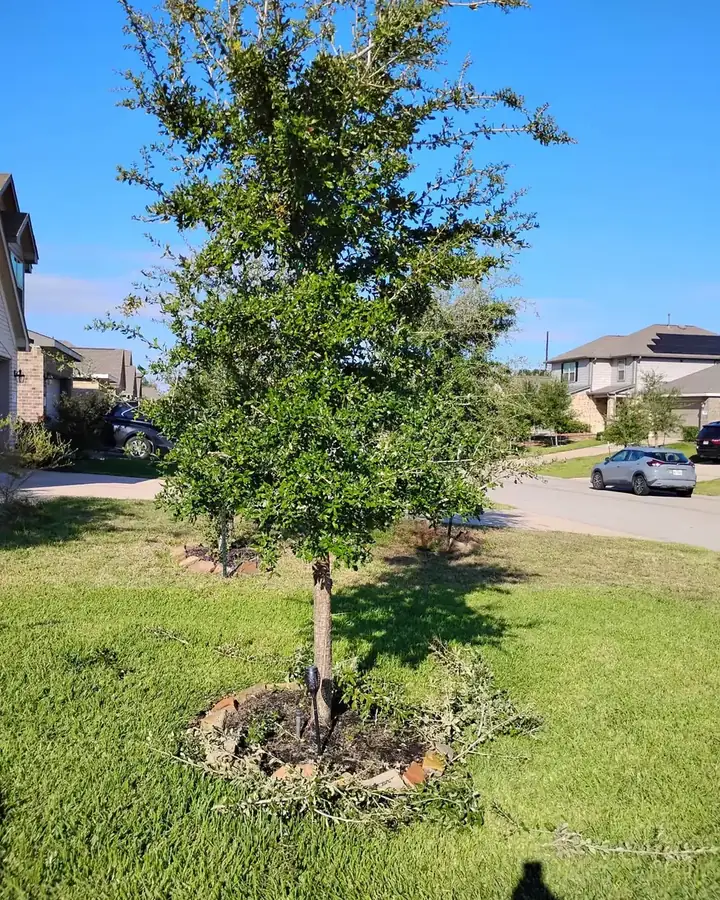
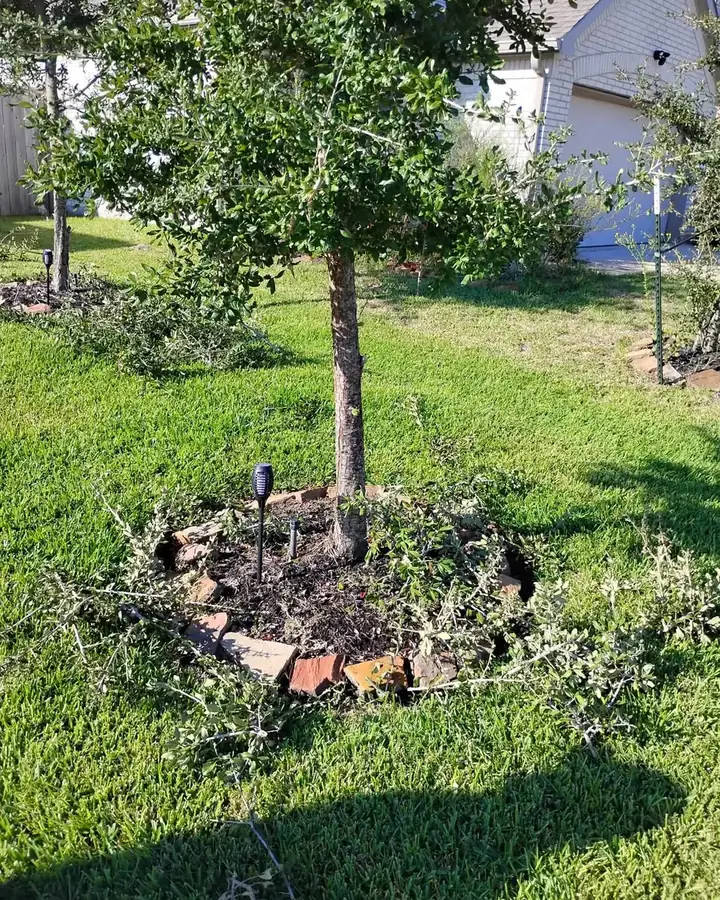


I called Tree Heroes to trim our great live oaks. We’ve had these trees trimmed annually for the last 17 years and when George came out to walk the property he gave us a fresh take. When they did the job they were prepared, quick and precise and afterward my property has never looked better. These guys exceeded my expectations and I recommend this service.

Structural pruning is how we train young trees in Cypress, TX to grow a strong, balanced framework before problems are locked in. Most new homes along the 290 corridor come with trees planted during construction. Left alone, many of them develop competing leaders, crowded limbs and weak branch unions that split in the first big storm.
We carefully shape branch structure, remove competing limbs and guide growth so the tree you plant today becomes a safe, valuable shade tree instead of a future hazard.
What structural pruning includes
One dominant leader
We select and favor a single central leader and subordinate the stems competing with it.
Strong branch unions
Narrow, tight forks with included bark are corrected early, while the cuts are still small.
Proper branch spacing
Scaffold branches are spaced around and along the trunk for balanced weight distribution.
Clearance planning
Low limbs over sidewalks, driveways and rooflines are managed gradually so the tree is not stripped.
Light, correct cuts
We remove only what the tree needs, following ANSI A300 pruning standards and ISA best management practices.

Why young trees in Cypress need it
Cypress is one of the fastest-growing communities in Texas. In neighborhoods like Towne Lake, Bridgeland, Marvida, Dunham Pointe, Elyson and Jubilee, whole streets of trees were planted at the same time, and most have never been pruned.
A small cut on a young tree prevents a large wound on a mature one. Training a tree in its first years costs far less than correcting a poorly structured tree later, and it reduces the storm vulnerability that comes with Gulf Coast wind and rain.
Ideal for
New-construction homeowners
HOAs with young street and common-area trees
Builders and developers
Anyone who just planted a tree
How we work
- 1
Assess
Our ISA Certified Arborist looks at each tree’s structure, health and surroundings.
- 2
Recommend
You get a clear plan: what to do now, what can wait and why.
- 3
Do the work right
Every cut follows ANSI A300 pruning standards and ISA best management practices.
- 4
Plan ahead
We schedule follow-up care so small issues stay small.
Serving Cypress and the 290 corridor
We provide structural pruning & young tree training in:
Including Cypress communities such as:
- Towne Lake
- Bridgeland
- Fairfield
- Marvida
- Dunham Pointe
- Elyson
- Jubilee
- Coles Crossing
What your neighbors say
Structural Pruning & Young Tree Training: frequently asked questions
What is structural pruning?
Structural pruning shapes a tree’s long-term framework: one strong leader, well-spaced branches and strong branch unions. Trimming removes visible growth; structural pruning builds long-term strength and balanced branch distribution.
Do young trees need professional pruning?
Yes. Early structural pruning helps prevent weak branch attachments, poor form and future safety hazards. The first years after planting are when corrections are smallest and most effective.
How often should a young tree be structurally pruned?
Most young trees benefit from an inspection every year and light structural pruning as needed, especially in newly developed neighborhoods. We set the schedule based on the species and how fast the tree is growing.
Will structural pruning make my tree look smaller?
No. We remove only the limbs that compete with the main structure, so the tree keeps its natural shape and keeps growing. We never “top” trees.
